
The Epidemic of Bribery and Indian Society
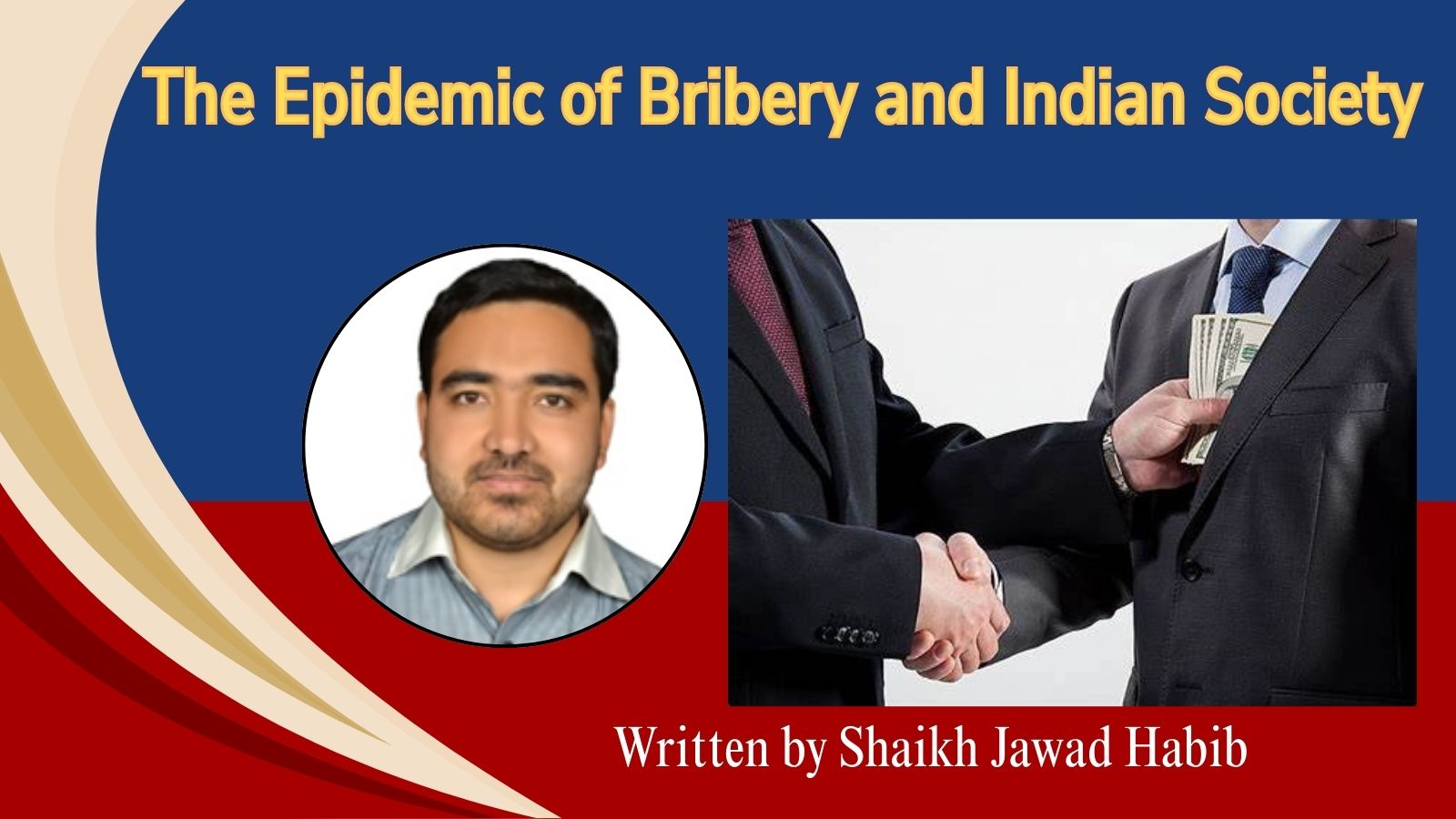
Written by Muhammad Jawad Habib

1- Introduction
Bribery is an ancient social disease that continues to plague most nations of the world, especially in South Asia. In India—a country with a vast population and democratic framework where laws are meant to protect the rights of citizens—bribery has become one of the greatest obstacles to justice. The powerful classes often manipulate the law in their favor through wealth and influence, while the weaker sections remain helpless, wandering around courts and government offices for years without relief.
2- In the Light of the Qur’an
Islam views bribery as a poison to justice and fairness. The Qur’an explicitly condemns it:
﴿وَلَا تَأْكُلُوا أَمْوَالَكُمْ بَيْنَكُمْ بِالْبَاطِلِ وَتُدْلُوا بِهَا إِلَى الْحُكَّامِ لِتَأْكُلُوا فَرِيقًا مِّنْ أَمْوَالِ النَّاسِ بِالْإِثْمِ وَأَنتُمْ تَعْلَمُونَ﴾ (Al-Baqarah: 188)
“Do not consume one another’s wealth unjustly, nor offer it to rulers in order that you may wrongfully consume a portion of other people’s wealth while you know [it is wrong].”
This verse clearly warns against bribery and corruption, declaring it a sinful means of usurping the rights of others.
3- The Example of Imam Ali (a.s.)
In a multi-religious society like India, the life of Imam Ali (a.s.) serves as a shining example of justice. History narrates that al-Ash‘ath ibn Qays once attempted to bribe him by sending sweet delicacies to his home, labeling it as a “gift” to influence his judgment. Imam Ali (a.s.) responded firmly:
«هَبَلَتْكَ الهُبُول، أَعَنْ دِينِ الله أَتَيْتَنِي لِتَخْدَعَنِي؟ وَاللهِ لَوْ أُعْطِيتُ الأقالِيمَ السَّبْعَةَ بِمَا تَحْتَ أَفْلاكِها عَلَى أَنْ أَعْصِيَ اللهَ فِي نَمْلَةٍ أَسْلُبُها جُلْبَ شَعِيرَةٍ ما فَعَلْتُهُ»
“Woe to you! Do you come to deceive me regarding the religion of Allah? By Allah, if I were given the seven realms with all that lies under their skies in exchange for disobeying Allah by snatching a single barley husk from an ant, I would never do it.”
This stance is a timeless lesson for leaders and officials in India, who must resist bribery and uphold justice at all costs.

4- Prophetic Teachings
The Prophet Muhammad (ﷺ) condemned bribery in the strongest terms. He said:
«لَعَنَ اللهُ الرَّاشِي وَالمُرْتَشِي وَالمَاشِي بَيْنَهُمَا»
“Allah has cursed the one who gives a bribe, the one who takes it, and the one who mediates between them.” (Tirmidhi, Kitab al-Ahkam)
On another occasion, when an official accepted a “gift,” the Prophet (ﷺ) rebuked him:
«كَيْفَ تَأْخُذُ مَا لَيْسَ لَكَ بِحَقّ؟ … أَرَأَيْتَ لَوْ قَعَدَ أَحَدُكُمْ فِي دَارِهِ وَلَمْ نُوَلِّهِ عَمَلاً أَكَانَ النَّاسُ يُهْدُونَ إِلَيْهِ شَيْئاً؟!»
“How can you take something that does not rightfully belong to you? … Tell me, if you had stayed in your house without being appointed to office, would people have brought you gifts?” (Sahih al-Bukhari)
These teachings strongly apply to Indian bureaucracy and politics today, where bribes are often disguised as gifts or favors.
5- Teachings of Imam Ja‘far al-Sadiq (a.s.)
The Imams of Ahl al-Bayt also emphasized the severity of bribery. Imam Ja‘far al-Sadiq (a.s.) said:
«وَأَمَّا الرِّشا فِي الحُكْمِ فَهُوَ الكُفْرُ بِاللهِ العَظِيم»
“As for bribery in judgment, it is nothing less than disbelief in the Almighty Allah.” (Wasa’il al-Shi‘a)
This statement highlights that bribery is not merely a social crime but also a spiritual and theological crime, undermining one’s faith in God.

6- Conclusion and Indian Context
In India, bribery has taken the form of a widespread epidemic. From government offices, police stations, and courts to educational institutions, the menace is visible everywhere. Islam’s message is clear: bribery destroys justice, exploits the poor, and strengthens the hands of the corrupt. For Muslims and all justice-loving citizens in India, fighting bribery is not only a religious obligation but also a national and moral duty. Only by reviving these teachings can Indian society move towards true justice and equality.




Comments
No comments yet. Be the first to write one.
Comments are closed.