
Modern Challenges and the Human Being
In today's world of intellectual and moral challenges, protecting faith and strengthening family relationships have become essential.
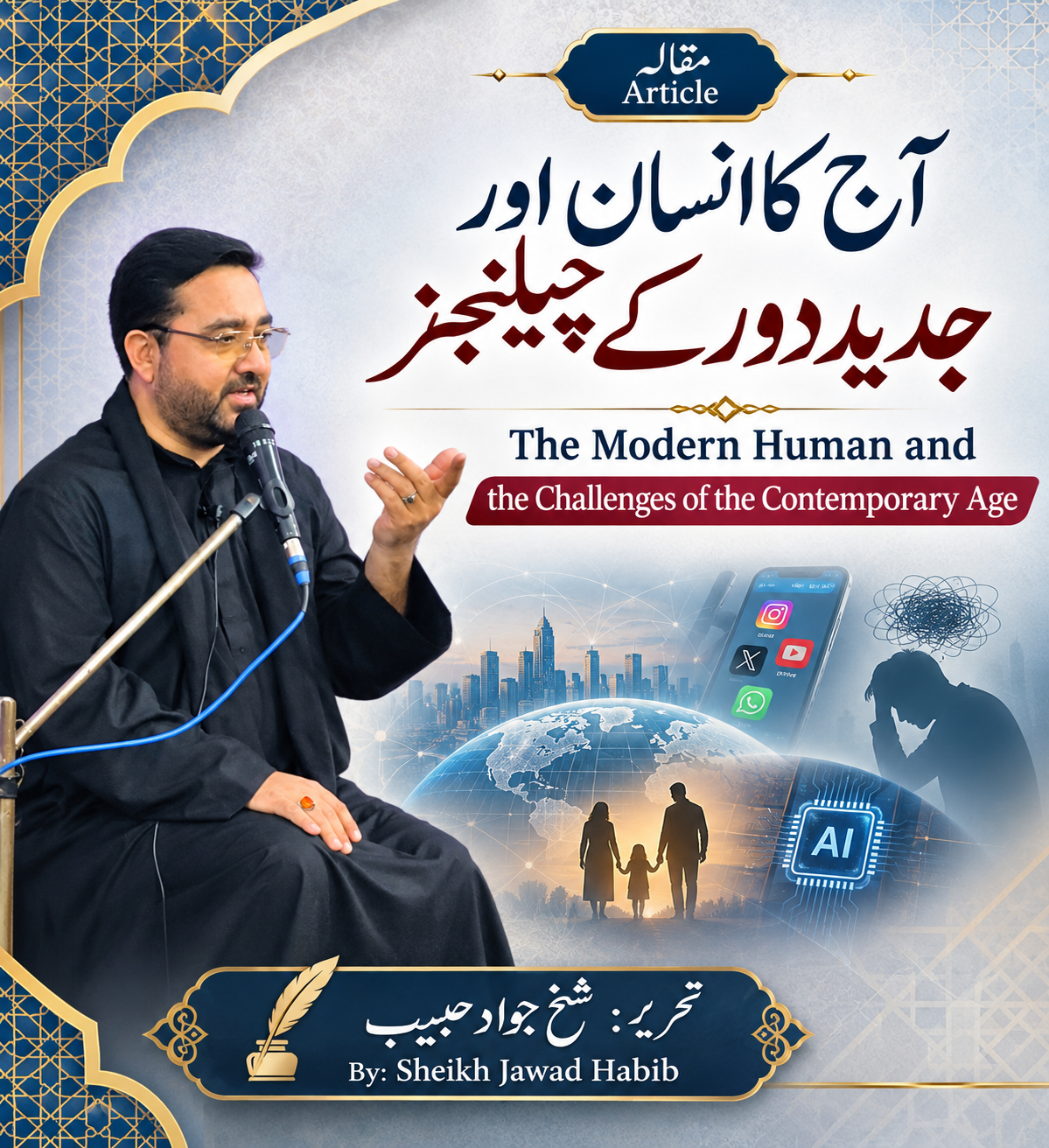
Modern Challenges and the Human Being
Written by: Sheikh Jawad Habib
We live in an age of rapid change, intellectual confusion, and moral challenges. In such circumstances, safeguarding one's beliefs, moral values, and religious identity has become more important than ever. Islamic traditions refer to the trials of faith and intellectual confusion that people may experience before the appearance of Imam Mahdi (peace be upon him). Some narrations describe this period as the “Period of Perplexity.” This concept raises an important question: How can a person protect their faith and moral character during difficult times? One fundamental answer lies in building and maintaining a strong family.
What Is the Period of Perplexity?
In Shia traditions, narrations have been transmitted from the Holy Prophet Muhammad (peace and blessings be upon him and his family), Imam Ali (peace be upon him), and the Imams of the Ahl al-Bayt concerning the intellectual and doctrinal trials people may face during the occultation of Imam al-Mahdi (peace be upon him). Shaykh al-Saduq recorded narrations related to occultation in his book Kamal al-Din wa Tamam al-Ni'mah, while Shaykh al-Tusi discussed related narrations in Al-Ghaybah.
The central message of these narrations is that remaining steadfast in faith during difficult circumstances requires sincerity, religious insight, and strong determination. A person must continually strive to distinguish truth from falsehood, uphold moral principles, and avoid misguided paths.
According to Islamic teachings, Satan seeks to mislead human beings and create divisions among them. One way this happens is through the spread of suspicion, envy, resentment, and hostility. These feelings weaken relationships, causing people to grow distant from one another instead of becoming sources of support and comfort.
A Narration That Made a Great Scholar Reflect
An account is related about the late Shaykh Murtaza Zahid, who used to lead congregational prayers in Tehran and offer moral advice to people after the prayers. On one occasion, Ayatollah Borujerdi invited him to Qom so that he could benefit from his counsel. During this meeting, Shaykh Murtaza Zahid related a narration that deeply impressed Ayatollah Borujerdi as well.
According to the narration, the Holy Prophet Muhammad (peace and blessings be upon him and his family) told Imam Ali (peace be upon him) that just as Imam Ali knew the paths of guidance, Satan also knew the paths that lead people astray.
It is related that Shaykh Murtaza Zahid spent several days reflecting on the meaning of this narration. He told his companions that if Satan knows many ways to mislead people, human beings must not become careless about protecting themselves.
The important lesson of this account is that people must remain vigilant in protecting their faith, morality, and character. Good intentions alone are not enough; it is also necessary to examine our behaviour, relationships, and everyday lives.
Why Is the Family an Important Target?
The family is the foundation of any society. A child first learns love, respect, honesty, responsibility, and good behaviour at home. Parents' attitudes, the relationship between spouses, and the atmosphere within the household all contribute to shaping a child's personality. This is why the effects of weakening the family are not limited to a few individuals; they can also affect the upbringing of an entire generation.
When trust disappears between spouses, communication between parents and children declines, siblings become distant, and relationships among relatives grow cold, people may find themselves alone when difficulties arise. In contrast, strong family bonds provide encouragement, help people correct their mistakes, and offer support during challenging times.
A Simple Example
A simple example can help explain the importance of family relationships. When a group of people travels along a dangerous path through snow-covered mountains, they may tie themselves together with a rope for protection. If one person's foot slips, the others can help steady them. However, a person travelling alone may face a greater risk of falling.
A family is like that rope. Parents, children, siblings, and other close relatives can provide one another with moral and emotional support. When these relationships are built on love, trust, and responsibility, people are less likely to feel alone when facing difficult circumstances.
However, when relationships are marked by constant bitterness, suspicion, and indifference, people gradually lose this source of support. That is why strengthening family relationships is the responsibility of every individual.
The Message of the Quran: Love and Reconciliation, Not Hostility
The Holy Quran identifies creating hostility and hatred among people as one of Satan's aims. The divine statement reads:
“Satan only desires to sow enmity and hatred among you.”
This verse warns us not to allow minor disagreements to turn into hatred and lasting hostility. Sometimes, a harsh remark, unfounded suspicion, a decision made in anger, or a refusal to apologise can create distances that become difficult to overcome.
This does not mean that every disagreement is wrong or that people should remain silent under all circumstances. The real need is to resolve disagreements through respect, fairness, and dialogue. Where a person's rights or safety are at risk, seeking appropriate help is also necessary.
How Can We Protect Our Families Today?
Strengthening a family depends more on small, everyday actions than on grand declarations. Parents should make time for their children, listen to them, and answer their questions with affection and reason. Spouses should respect one another, share responsibilities, and seek solutions to problems rather than trying to humiliate each other during disagreements.
Balance in the use of mobile phones and social media is equally important. If all family members are in the same place but everyone remains occupied with a screen, communication and emotional bonds may weaken. Every day, there should be some time when family members sit together, share their experiences, and learn about one another's circumstances.
Religious education for children also cannot be achieved through advice alone. When children see their parents practising prayer, honesty, justice, helping others, and mutual respect, they understand these values more effectively. Maintaining appropriate contact with relatives, respecting elders, and helping one another when necessary also strengthen trust and a sense of belonging within the family.
A Strong Family, a Strong Society
The concept of the Period of Perplexity reminds us of the importance of protecting faith, developing religious insight, and remaining morally steadfast. One important practical aspect of this message in the modern age is the need to strengthen our families on the foundations of love, trust, and responsibility.
When there is respect at home, children have an opportunity to learn respect. When honesty and fairness are practised within the household, the younger generation can make these values part of their lives. When family members support one another during difficult times, individuals can better cope with loneliness and despair.
A family is not merely a group of people living under the same roof. It is a network of relationships through which people protect one another's faith, morality, dignity, and hope. Strengthening these relationships is our religious, moral, and social responsibility. This strong foundation can help nurture future generations and contribute to the development of a healthy society.
For this reason, protecting the family should not be regarded as merely a domestic matter. It is an issue closely connected with religious education, social stability, and the future of coming generations.