
Islam and Secularism – An Intellectual and Ideological Analysis
Part 1: Introduction
Among various philosophical and ideological systems, Islam and Secularism stand on fundamentally opposite principles.
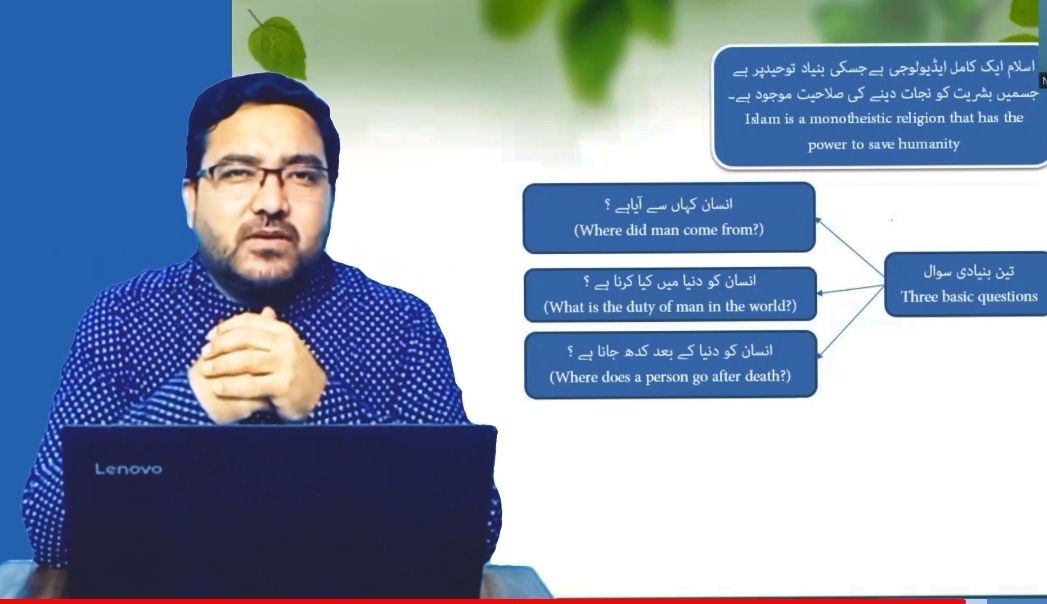
- Islam is a comprehensive way of life that governs all aspects of human existence—individual, social, political, and economic—under divine guidance.
- Secularism is an ideology that separates religion from public and political life, considering religion a private affair.
This lecture will explore the core principles, differences, and impacts of Islam and Secularism.
Part 2: Fundamental Definitions of Islam and Secularism
1. Islamic Perspective
- The fundamental belief of Islam is Tawheed (Oneness of God), which influences every aspect of life.
- According to Islam, Allah is the ultimate sovereign, and life should be governed by the principles of Shariah (Islamic Law).
- Islam provides a comprehensive system for spiritual, moral, social, political, and economic development.
2. Secularist Perspective
- Secularism advocates the separation of religion from politics and public affairs.
- It is based on the idea that religion is a private matter and should have no influence on governance, economy, or societal structures.
- This ideology emerged in Europe as a reaction to the conflict between the Church and monarchy, where the oppressive role of the Church led to religion being confined to personal worship.
Part 3: Key Differences Between Islam and Secularism
| Aspect | Islam | Secularism |
|---|---|---|
| Divine Sovereignty | Allah is the supreme ruler, and governance is based on Shariah | Human beings create their own laws and governments |
| Life’s Foundation | Religion guides all aspects of life | Religion is restricted to personal life |
| Legislation | Laws are derived from the Qur’an and Sunnah | Laws are based on human reasoning, experience, and majority opinion |
| Moral Standards | Good and evil are determined by divine revelation | Morality is based on human desires and societal trends |
| Politics | Politics and governance are integral to religion | Politics is kept separate from religion |
| Economic System | Islamic economy emphasizes Zakat, prohibition of interest, and social justice | Capitalist or socialist economic models are followed |

Part 4: Impacts of Secularism and the Islamic Perspective
1. Positive Aspects of Secularism
- Secularism freed Europe from the oppression of the Church.
- It played a role in the advancement of science and technology.
- It laid the foundation for democratic governance.
2. Negative Aspects of Secularism
- Moral Decline: The removal of religion from public life led to the weakening of ethical values.
- Disintegration of the Family System: Divorce rates, extramarital relationships, and instability in families increased in secular societies.
- Economic Exploitation: The dominance of interest-based systems, inflation, and economic inequality became common.
- Spiritual Crisis: The weakening of religious and moral values led to increased depression, anxiety, and inner emptiness.
3. The Islamic Alternative
- Islam ensures a balance between morality, spirituality, and social order.
- Islam provides a just and fair system that does not serve the interests of a particular elite but rather focuses on the collective welfare of society.
- An Islamic government ensures social justice, human rights, economic equality, and spiritual growth.
Part 5: Steps to Establish an Islamic Society
✔ Education and Awareness: Integrating Islamic teachings with modern sciences to create an educational system that fosters both faith and knowledge.
✔ Economic Reforms: Promoting an interest-free economy and ensuring a fair distribution of wealth through Zakat and charity.
✔ Implementation of Islamic Laws: Establishing laws based on justice and Shariah principles to guide society effectively.
✔ Restoring Ethical Values: Strengthening the family system and reviving Islamic moral values in communities.
Part 6: Conclusion
🔹 Islam is a complete way of life, whereas secularism attempts to separate religion from everyday affairs.
🔹 Islamic governance is based on justice, equality, spiritual development, and social welfare, whereas secularism often weakens these foundations.
🔹 Muslims should strive to uphold Islamic teachings, address contemporary challenges, and build a society that ensures success in both this world and the hereafter.
📌 Final Message:
"Islam is the path to success in both this world and the hereafter, while secularism may offer temporary material progress but often leads to moral and spiritual decline."