
The Light of Lady Fatima and the Darkness of Fitna
Explore how the Quran, the teachings of the Ahl al-Bayt, and religious insight can help confront the intellectual and cultural challenges of the modern age.
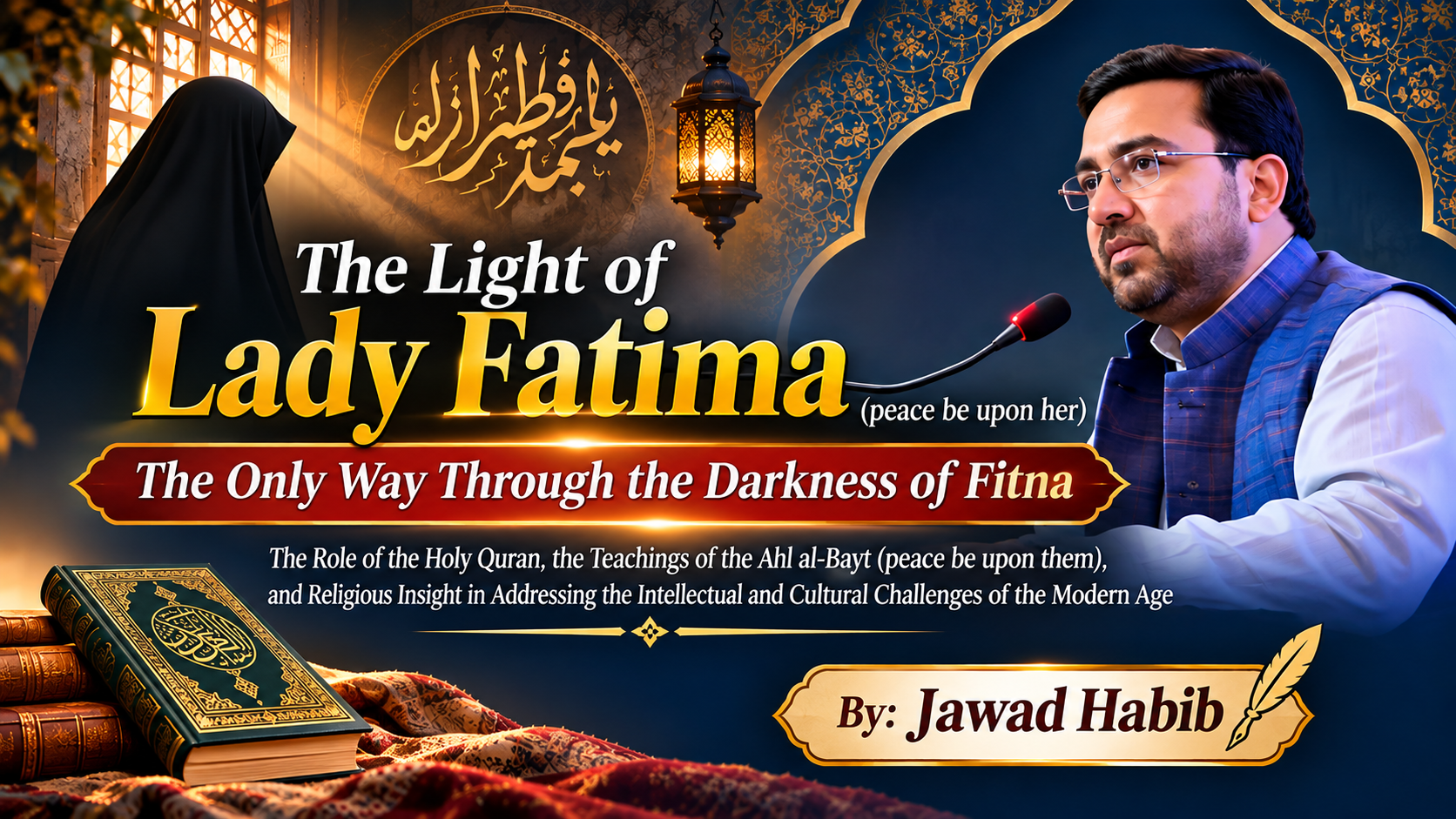
The Light of Lady Fatima (peace be upon her): The Only Way Through the Darkness of Fitna
By: Jawad Habib
Introduction
The contemporary world faces extensive challenges in intellectual, moral, cultural, and social spheres. The spread of ideological and religious doubts, the circulation of false information, the weakening of moral values, social divisions, and the negative effects of certain online content are among the factors that can make it difficult for people to recognise the truth. In such circumstances, returning to the teachings of the Holy Quran and the knowledge imparted by the Ahl al-Bayt (peace be upon them) is essential for strengthening faith, developing insight, and safeguarding the intellectual and moral well-being of society.
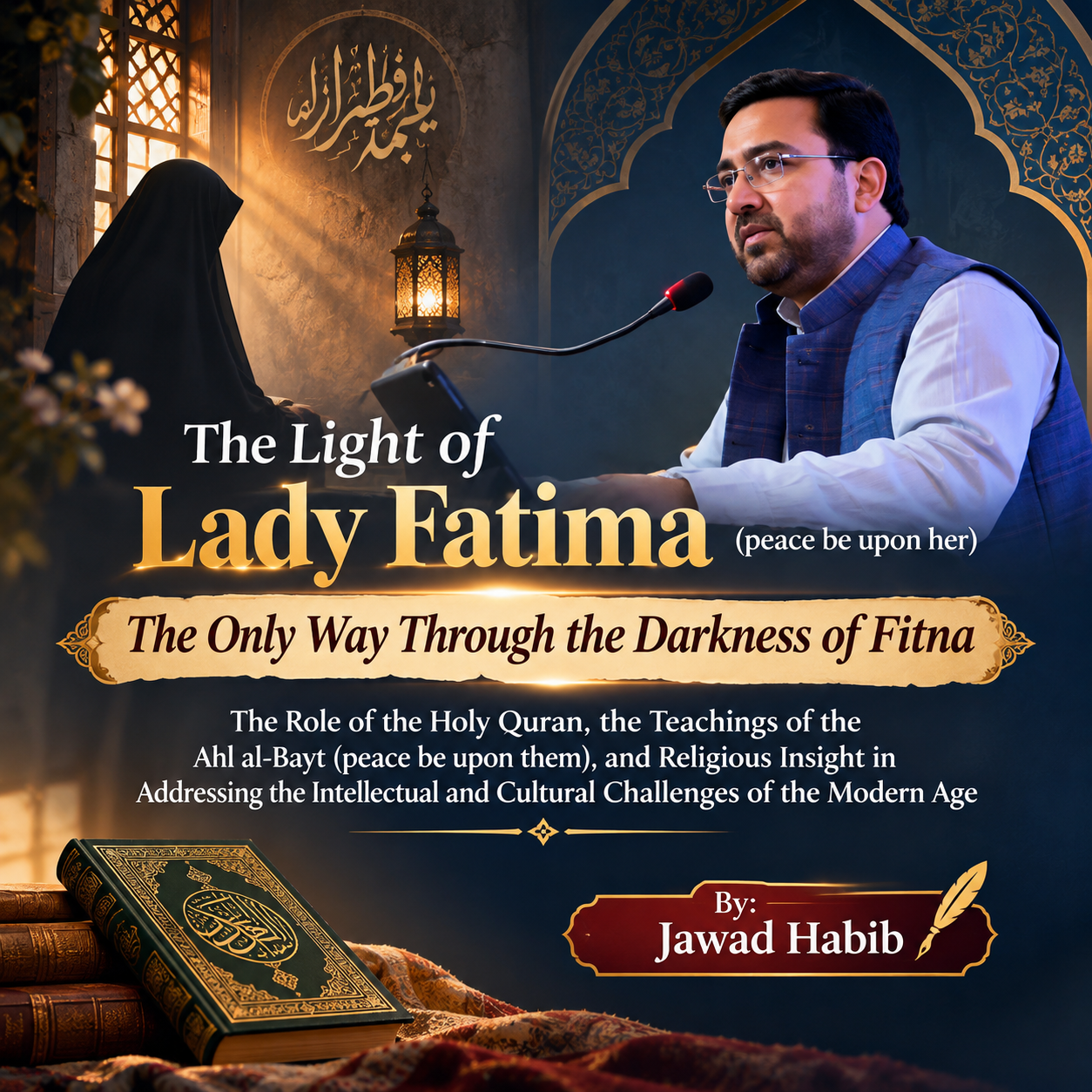
In this context, the personality and way of life of Lady Fatima al-Zahra (peace be upon her) hold a special place. Her life reflects devotion to God, purity, the pursuit of justice, the defence of truth, and steadfast commitment to divine values. Understanding the different dimensions of her example can guide people as they confront the intellectual and cultural trials and crises of the modern age.
The Holy Quran: A Source of Light and Guidance
In Islamic thought, light symbolises guidance, awareness, and liberation from the darkness of ignorance and misguidance. In verse 35 of Surah An-Nur, the Holy Quran states:
“Allah is the Light of the heavens and the earth.”
Quran, 24:35
This verse expresses the fundamental place of divine guidance in the Islamic worldview. To recognise the right path in life and distinguish truth from falsehood, human beings need God's guidance and the teachings of the prophets and the divinely guided figures.
The Holy Quran also warns of the widespread danger of fitna in verse 25 of Surah Al-Anfal:
“And fear a trial that will not afflict exclusively those among you who have done wrong.”
Quran, 8:25
The meaning of this verse indicates that the consequences of fitna may extend beyond those who commit wrongdoing and affect different parts of society. Therefore, indifference toward the spread of deviation, ignorance, and social corruption can have far-reaching consequences. Raising awareness, accepting responsibility, correcting one's conduct, and defending the truth are among the most important duties of individuals in such circumstances.
The Place of Lady Fatima in the Tradition of Divine Guidance
In Islamic teachings, particularly in the school of the Ahl al-Bayt (peace be upon them), Lady Fatima al-Zahra (peace be upon her) is an outstanding example of faith, piety, chastity, spiritual knowledge, and the defence of truth. Her personality is not limited to her family and spiritual status; her life also embodies important dimensions of social responsibility, the pursuit of justice, and commitment to divine principles.
In verse 33 of Surah Al-Ahzab, the Holy Quran states:
“Indeed, Allah only desires to remove impurity from you, O People of the Household, and to purify you completely.”
Quran, 33:33
The Verse of Purification is among the important Quranic verses discussed in relation to the status of the Ahl al-Bayt (peace be upon them). The Verse of Mubahala in Surah Aal-e-Imran is also significant in studies concerning the standing of the family of the Noble Prophet Muhammad (peace and blessings be upon him and his family).
A well-known narration attributed to the Noble Prophet Muhammad (peace and blessings be upon him and his family) states:
“Fatima is a part of me; whoever harms her has harmed me.”
This narration reveals the special position of Lady Fatima (peace be upon her) in the eyes of the Prophet and emphasises the need to respect her dignity and status. Accordingly, studying her example can help strengthen moral values, promote justice, and deepen commitment to the truth in both individual and social life.
Purity of Heart and Reform of Conduct: Foundations of Insight
One of the fundamental principles of religious education is attention to a person's inner well-being and its role in recognising the truth. In verse 22 of Surah Az-Zumar, the Holy Quran states:
“Is one whose heart Allah has opened to Islam, so that he is upon a light from his Lord, like one who is not so?”
Quran, 39:22
This verse emphasises the importance of spiritual openness and benefiting from the light of guidance. From the perspective of Islamic ethics, faith has a meaningful effect on human life when it is also reflected in behaviour and relationships. Honesty, trustworthiness, respect for the rights of others, avoiding backbiting and slander, respecting parents, and helping those in need are practical expressions of faith.
Prayer and connection with God, studying and reflecting on the Holy Quran, self-examination, and efforts to improve one's character can contribute to spiritual growth and strengthen the ability to distinguish right from wrong. A society whose members possess moral integrity and religious awareness is better prepared to resist deception, rumours, and deviation.
The Quran and the Ahl al-Bayt: Two Fundamental Pillars of Guidance
The Holy Quran and the example of the Ahl al-Bayt (peace be upon them) occupy a fundamental place in Islamic guidance. The Quran presents principles and standards for distinguishing truth from falsehood, while the lives of the Ahl al-Bayt provide practical examples of faith, justice, ethics, and responsibility.
The well-known Hadith al-Thaqalayn is narrated from the Noble Prophet Muhammad (peace and blessings be upon him and his family) in these words:
“I leave among you two precious things: the Book of Allah and my progeny, the Ahl al-Bayt.”
This narration emphasises the importance of the Quran and the Ahl al-Bayt on the path of guidance. For this reason, religious knowledge should not be limited to superficial information or passing emotions. It requires study, reflection, familiarity with reliable sources, and the practical application of religious teachings in everyday life.
In the age of communication, this responsibility has become even more significant. The rapid circulation of information on social media can sometimes facilitate the spread of rumours, the distortion of facts, and the creation of divisions. Strengthening media literacy, verifying news sources, refraining from sharing unconfirmed material, and addressing questions and doubts through reasoned discussion are therefore important cultural necessities for contemporary society.
Modern-Day Fitna and the Need for Cultural Insight
Fitna can be understood as a situation in which recognising the truth becomes difficult and people are exposed to deception, error, or deviation. It may appear in the form of religious doubts, social divisions, the promotion of unethical behaviour, the distortion of news, or the spread of hopelessness among young people.
Addressing these challenges requires more than warnings. It calls for cultural planning, sound education, rational dialogue, and opportunities for the intellectual development of the younger generation. Families, schools, religious centres, and media organisations can all play an effective role in this regard.
Teaching the Quran and the traditions of the Ahl al-Bayt, strengthening critical-thinking skills, creating a healthy environment for religious questions, and familiarising young people with standards for identifying reliable news are among the measures that can contribute to greater social insight.
In this process, the example of Lady Fatima al-Zahra (peace be upon her) demonstrates the connection between knowledge, faith, and social responsibility. Her life shows that commitment to divine values should also be reflected in people's behaviour, decisions, and positions on social issues.
The Fatimid School: Connecting Love, Ethics, and Social Responsibility
Love for Lady Fatima al-Zahra (peace be upon her) produces deeper cultural and educational benefits when it is accompanied by knowledge of her life and practical adherence to the values she exemplified. Devotion to the Ahl al-Bayt (peace be upon them) should not be confined to words or the organisation of religious ceremonies. It should also be reflected in personal ethics, family relationships, and social conduct.
Raising children on the foundations of faith and good character, fostering mutual respect among family members, avoiding humiliation and verbal abuse, supporting those in need, defending the rights of the oppressed, and striving to promote justice are among the practical ways to embody these values.
The family is the first environment in which a person's character develops. Through their words and actions, parents can help nurture faith, responsibility, and respect for others in their children. Educational and cultural institutions can also contribute to transmitting religious values to future generations by presenting sound role models and reliable content.
From this perspective, the Fatimid school is not merely a subject for historical study or an expression of affection. It also offers important potential for moral education, strengthening social solidarity, and promoting a culture of justice and spirituality within society.
Conclusion
The light of Lady Fatima al-Zahra (peace be upon her) symbolises guidance, purity, knowledge, the pursuit of justice, and steadfastness on the path of truth. A study of the teachings of the Holy Quran and the example of the Ahl al-Bayt (peace be upon them) shows that confronting intellectual and cultural fitna requires conscious faith, recognition of the truth, moral reform, and individual and social responsibility.
In today's circumstances, strengthening religious insight, improving media literacy, reinforcing family foundations, providing moral education for young people, and promoting a culture of dialogue and justice are among society's important needs. These goals can be achieved more effectively when religious teachings move beyond theoretical knowledge and become evident in people's everyday behaviour and decisions.
Ultimately, following the example of Lady Fatima al-Zahra (peace be upon her) requires faith to be accompanied by awareness, love by action, and knowledge by responsibility. A society guided by divine guidance, ethics, and the pursuit of truth is better equipped to recognise fitna, confront deviation, and preserve its intellectual and cultural well-being.

Comments
No comments yet. Be the first to write one.